Weather's Role in Shaping In-Play Cricket Betting Markets Across Seasons
Eden Günther · Jun 14, 2026
Weather's Role in Shaping In-Play Cricket Betting Markets Across Seasons
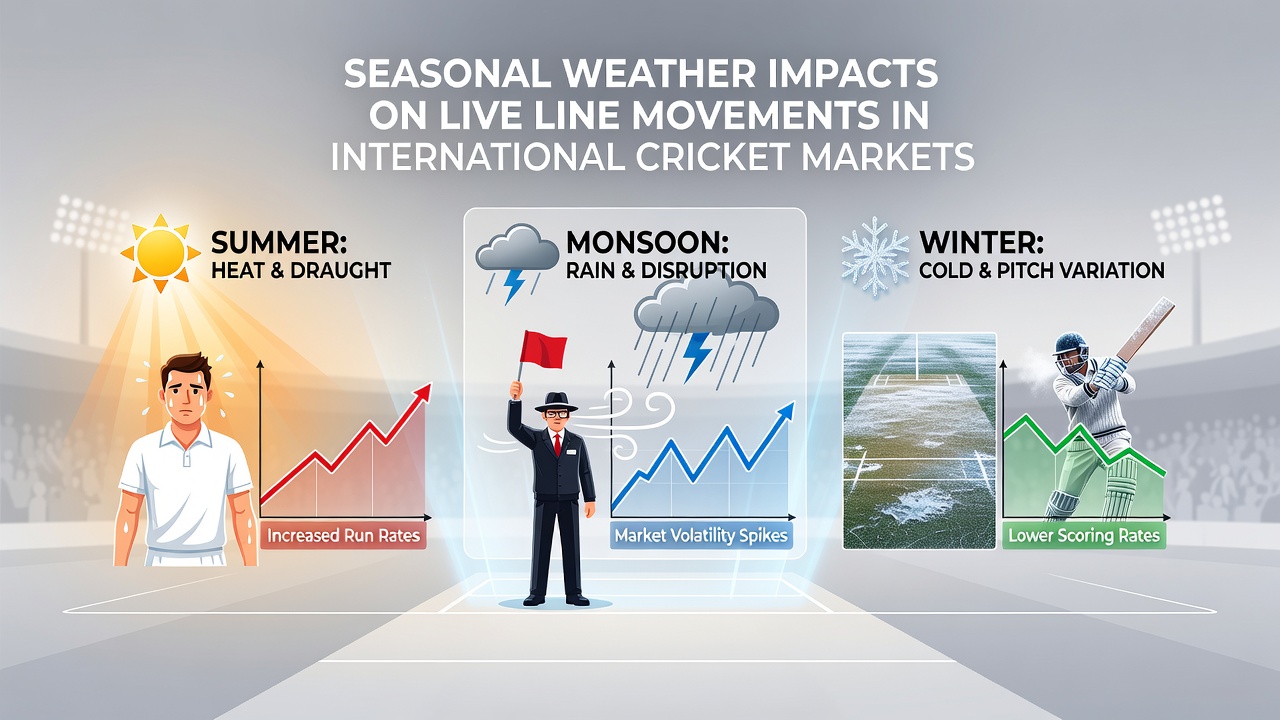
Seasonal weather patterns create measurable shifts in live cricket betting lines because conditions alter ball behavior, player performance, and match duration in ways that bookmakers adjust for in real time. Data from international matches shows that humidity levels above 70 percent increase swing movement by up to 15 percent according to meteorological records compiled during bilateral series, while sudden temperature drops often push totals markets lower within minutes of an innings start. Observers note these adjustments appear most pronounced during tours that cross multiple climate zones, such as England teams visiting India or Australia hosting winter fixtures.
Monsoon and Rain Patterns in Subcontinental Markets
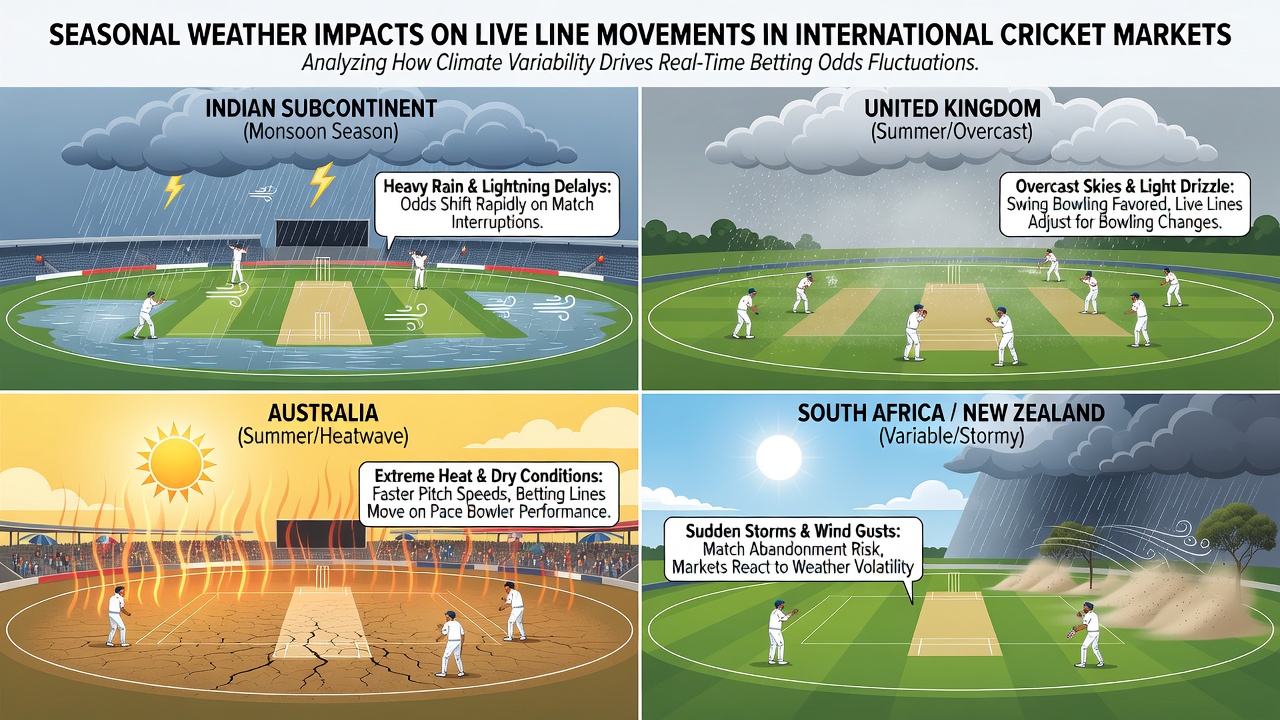
Monsoon seasons in South Asia produce frequent interruptions that directly influence over-under lines and match-winner odds during live play. In June 2026, several T20 leagues scheduled across India and Sri Lanka are expected to encounter similar rainfall distributions to those recorded in previous years, where afternoon showers delayed play an average of 42 minutes per match according to tournament logs. Bettors tracking these events see totals lines move downward rapidly when radar indicates incoming systems, because reduced overs limit scoring opportunities and force revised projections based on Duckworth-Lewis-Stern calculations. Industry reports from regional cricket boards document how bookmakers widen spreads during these periods to account for uncertainty around resumption times.
Temperature and Humidity Effects on Swing and Seam
High humidity combined with moderate temperatures enhances conventional swing, a factor that analysts track when monitoring live player prop markets for pace bowlers. Research from the Australian Bureau of Meteorology links dew formation on outfields after sunset to increased seam movement, which often elevates wicket-taker odds for certain bowlers within the first 10 overs of an innings. In contrast, drier conditions prevalent during Australian summers flatten swing profiles and push run-rate markets higher as batters exploit the true bounce. Those who study these variables note that live lines for boundary counts and six-hitting props respond within minutes of on-field data feeds confirming pitch moisture levels.
Wind and Visibility Factors in Coastal and Island Venues
Coastal grounds introduce wind as an additional variable that shifts totals and boundary lines, particularly during Caribbean and South African day-night fixtures. Sustained winds above 25 kilometers per hour have been shown in venue-specific studies to carry balls farther on leg-side deliveries, prompting oddsmakers to adjust six-hitting props upward mid-innings. Visibility reductions from sea mist or dust storms produce the opposite effect, compressing run-rate expectations and tightening match-winner spreads. Data collected across multiple West Indies seasons indicates these line movements occur faster in T20 formats than in longer Tests because fewer deliveries remain to balance out anomalies.
Winter and Early Spring Conditions in Temperate Tours
Tours scheduled in temperate regions during winter months bring cold starts that stiffen pitches and reduce early swing, altering opening partnership markets accordingly. Figures from England and New Zealand domestic seasons reveal that morning temperatures below 15 degrees Celsius correlate with lower first-innings totals, prompting live adjustments to team total lines within the opening powerplay. As surfaces warm through the day, those same markets often rebound, creating the kind of momentum swings that characterize in-play trading. Cricket statisticians have compiled datasets showing these daily temperature cycles produce repeatable patterns across bilateral series played in similar latitudes.
Integration of Weather Data into Modern Betting Platforms
Modern platforms incorporate live weather feeds from multiple sources to recalibrate lines automatically, reducing the window between atmospheric changes and odds updates. A study published through the University of Cape Town examined how integrated meteorological inputs affected line stability during a full season of franchise cricket, finding that rain-delay protocols alone accounted for 23 percent of observed mid-innings movements in totals markets. Operators in various jurisdictions now display simplified weather icons alongside odds to inform users, although the underlying algorithms remain proprietary. Those monitoring international markets observe that discrepancies between venue-specific forecasts and actual conditions still generate short-lived value opportunities before lines realign.
Conclusion
Seasonal weather continues to drive measurable adjustments in live cricket betting lines across international markets through its direct influence on playing conditions and match timelines. Records from multiple governing bodies and meteorological agencies demonstrate consistent correlations between humidity, temperature, wind, and line movements that operators incorporate into their pricing models. As schedules evolve toward events in June 2026 and beyond, these environmental factors are expected to maintain their role in shaping in-play dynamics across formats and regions.