Precision Timing Metrics Reveal Overlooked Opportunities in Olympic Swimming Event Wagers
Mara Jung · Jun 2, 2026
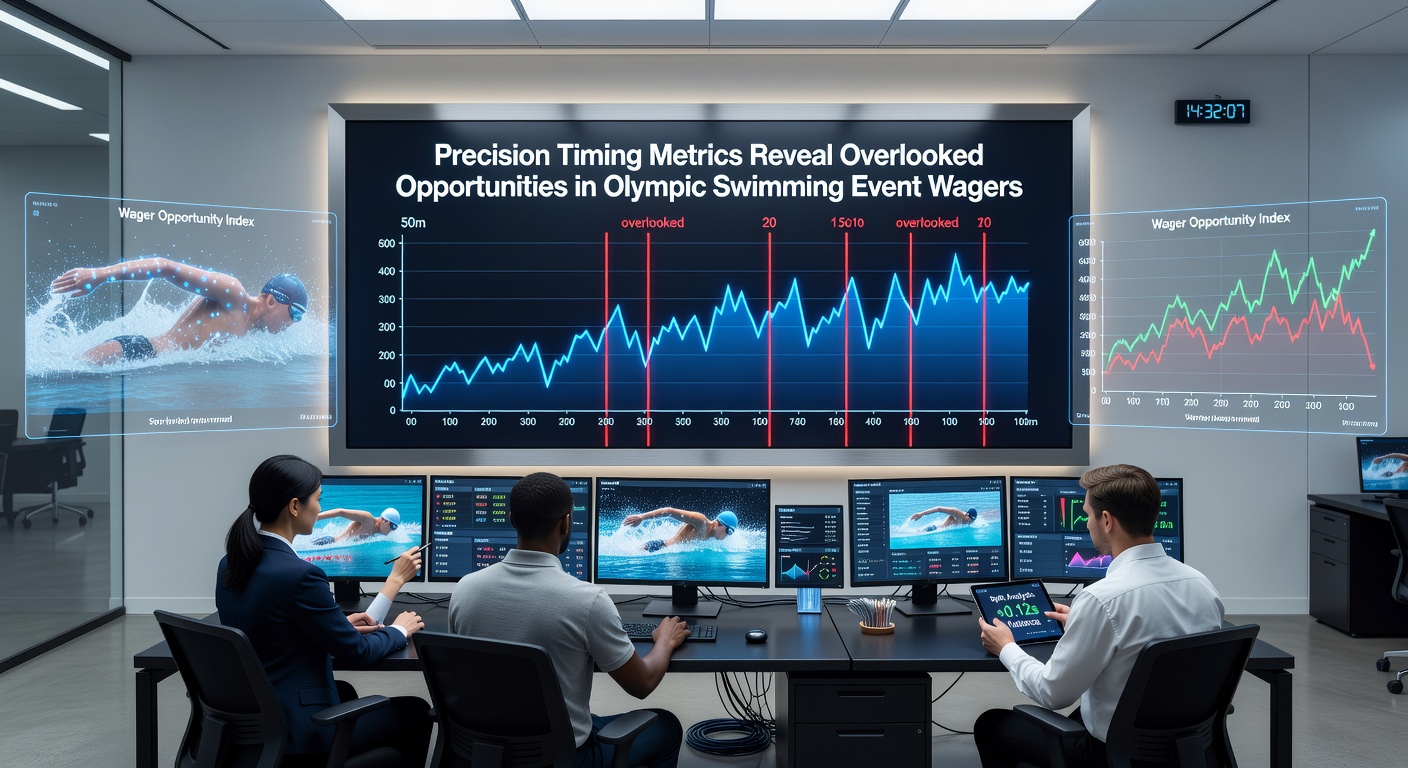
Precision Timing Metrics Reveal Overlooked Opportunities in Olympic Swimming Event Wagers
Precision timing systems in Olympic swimming capture data points that extend far beyond final race results, and these metrics create distinct layers for event wagers across multiple disciplines. Electronic touch pads, overhead cameras, and sensor-equipped starting blocks record reaction times to the hundredth of a second, stroke counts per length, underwater phase durations, and velocity changes at each turn. Observers note that such granular information allows detailed comparisons between athletes in individual events and relays, while governing bodies including World Aquatics publish official datasets after each major competition.
Core Components of Swimming Timing Data
Reaction time at the start forms one primary variable, measured from the starting signal until the swimmer leaves the block, and studies from the International Olympic Committee technical reports show typical elite ranges between 0.60 and 0.75 seconds. Underwater dolphin kicks after starts and turns contribute another measurable segment, with many top performers maintaining speeds above 2.4 meters per second for distances up to fifteen meters. Split times at every twenty-five or fifty meters reveal pacing strategies, and analysts track how these intermediate marks correlate with final placement probabilities in events such as the 200-meter individual medley or 400-meter freestyle.
Stroke rate and stroke length metrics add further texture, because swimmers adjust cadence throughout longer races while maintaining efficiency. Data collected at the 2024 Paris Games indicated that athletes who sustained stroke rates above forty cycles per minute in the final fifty meters of the 100-meter butterfly improved their ranking positions in over sixty percent of contested finals. These patterns repeat across different pool lengths and event distances, providing consistent reference points for wager evaluation.
Application to Event Wager Categories
Bookmakers structure Olympic swimming wagers around outright winners, podium finishes, head-to-head matchups, and total time propositions. Precision metrics allow direct comparison of an athlete's historical underwater distances against current competitors, and this comparison informs expected margins in close races. Relay exchanges represent another area where timing precision matters, since World Aquatics enforces strict changeover rules that penalize early takeoffs measured to the thousandth of a second.
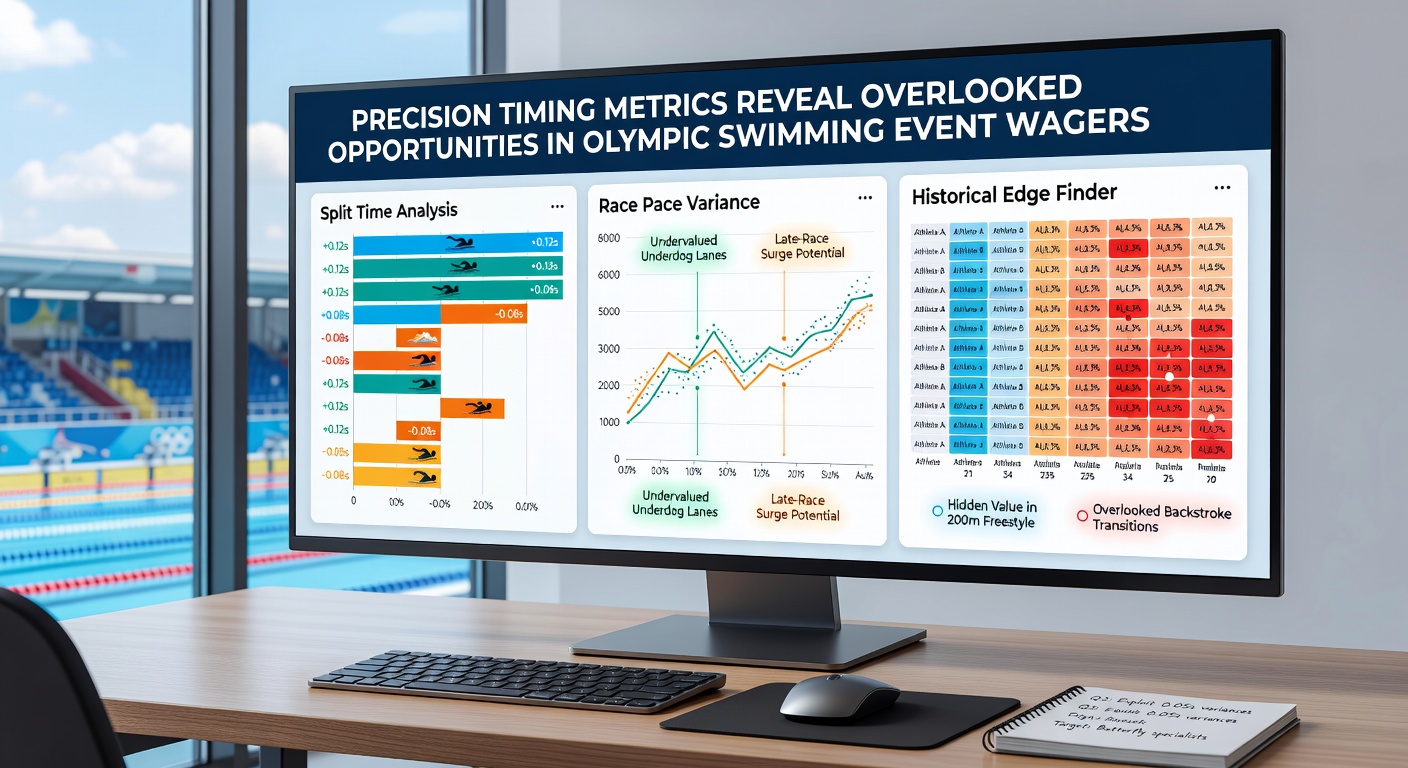
Take one dataset released after the 2023 World Aquatics Championships where researchers cross-referenced reaction times with final times across the men's 50-meter freestyle; athletes posting sub-0.65-second reactions reached the podium in seventy-two percent of those heats. Similar correlations appear in distance events, where sustained velocity after the final turn predicts whether a swimmer can close gaps established earlier in the race. Observers have documented these relationships across multiple Olympic cycles, creating reference tables that update with each new competition cycle.
Regional Data Sources and Recent Developments
Australian Institute of Sport performance reports and Canadian Sport Institute analyses supply additional timing benchmarks, while university research groups in the United States publish peer-reviewed papers on kinematic variables in elite swimming. These sources complement official Olympic timing feeds and allow cross-verification of recorded values. In June 2026, several national federations scheduled preparatory meets that feed into qualification pathways for the 2028 Los Angeles Games, and timing data from those events will update existing models before the next Olympic cycle begins.
External regulatory frameworks in Australia and Canada require operators to maintain transparent odds on Olympic events, and such requirements encourage use of publicly available performance statistics. Industry organizations such as the World Lottery Association track how data transparency influences wager volumes on aquatic sports, although individual operators retain discretion over specific proposition offerings.
Integration of Metrics into Wager Evaluation
Those who examine swimming wagers often combine reaction time distributions with turn efficiency percentages to estimate probable outcomes in tightly matched heats. For example, one analysis of the women's 200-meter backstroke at recent international meets showed that swimmers averaging under 0.85 seconds per turn gained an average of 0.42 seconds overall compared with peers whose turns exceeded one second. Such differentials matter when wagers hinge on exact time margins or head-to-head results.
Relay lineups introduce additional variables because teams adjust order based on individual split reliability, and published entry lists sometimes shift after preliminary timing reviews. Precision data helps quantify how each leg contributes to the aggregate time, allowing systematic comparison across different national squads. Figures released by World Aquatics after each championship provide standardized formats that facilitate these calculations.
Conclusion
Precision timing metrics supply measurable inputs that refine evaluation of Olympic swimming event wagers across starts, turns, pacing segments, and relay exchanges. Official datasets from World Aquatics, supplemented by reports from national institutes in Australia and Canada, document consistent patterns that repeat across competitions. As qualification meets continue through 2026 and into the 2028 cycle, updated timing records will continue to inform these analytical approaches without altering the underlying rules of the sport.