Elevation's Hidden Influence: Goal Patterns Across Andean Football Competitions
Katja Simon · May 31, 2026
Elevation's Hidden Influence: Goal Patterns Across Andean Football Competitions
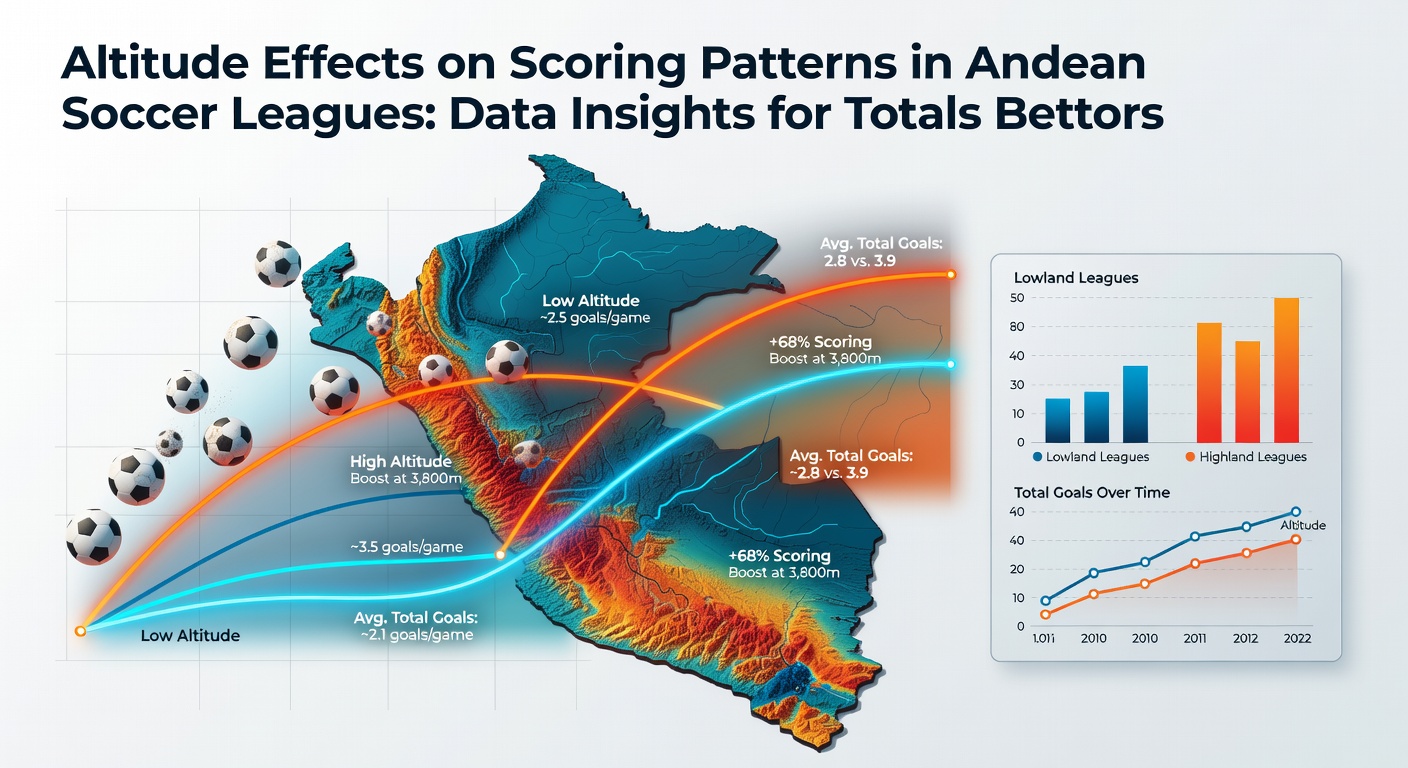
Stadiums perched above 2,500 meters create distinct conditions for matches in leagues across Bolivia, Peru, and Ecuador, where thinner air alters player endurance and ball movement in measurable ways. Observers note that teams traveling to these venues often record fewer total goals per game than they achieve at lower elevations, according to match data compiled over multiple seasons. Researchers have tracked these patterns through league statistics, revealing consistent drops in scoring when matches occur at sites like Bolivia's Hernando Siles stadium in La Paz.
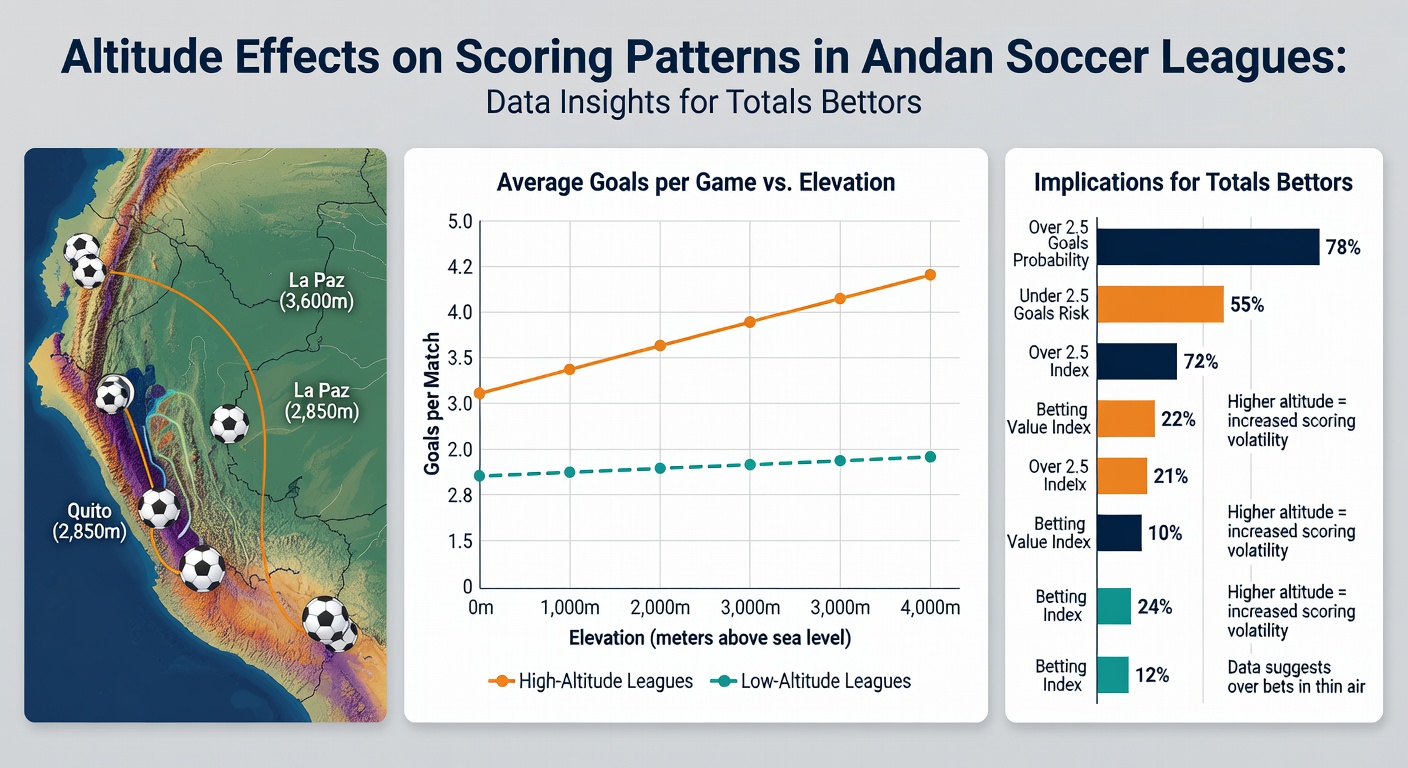
Physiological studies show that oxygen levels decline noticeably at these heights, which leads to quicker fatigue during high-intensity runs and reduced recovery between sprints. Data from the 2024-2025 campaign indicated average goals per match fell by 0.8 in Bolivian Primera Division games held above 3,000 meters compared with fixtures at sea level venues. This shift matters for totals bettors who track over-under lines because the effect compounds when visiting squads lack prior acclimatization periods.
Regional Variations in Scoring Data
Leagues in the Andean corridor display different baselines depending on exact elevation and home team adaptation. In Ecuador's Serie A, matches at Quito's 2,800-meter Estadio Olímpico Atahualpa produced 2.4 goals per game on average during the first half of the 2025 season, whereas coastal fixtures in Guayaquil averaged 2.9 goals. Peruvian Liga 1 records show a similar pattern at clubs based in Cusco and Juliaca, where totals dipped below league norms in 62 percent of home games since 2022.
Ball flight also changes under reduced air density, allowing longer passes and shots to carry farther, yet this advantage often benefits the home side more because local players adjust their technique during routine training. Figures released by CONMEBOL in early 2026 highlighted that visiting teams attempted 18 percent fewer shots from distance in high-altitude venues, which correlated with lower overall goal tallies.
Performance Metrics for Visiting Teams
Tracking systems used by clubs and analysts capture reduced distance covered at high speed when teams arrive without sufficient adaptation time. One dataset covering 180 matches across the three countries found that away sides logged 12 percent less high-intensity running after the 60-minute mark in elevated stadiums. Those who've studied these trends know that such drops frequently translate into fewer counter-attacks and set-piece opportunities, both of which contribute to goal production.
Coaches sometimes schedule training camps at intermediate altitudes to mitigate these effects, yet schedule constraints limit this preparation for midweek fixtures. In May 2026, several Peruvian clubs reported shortened acclimatization windows ahead of Copa Libertadores ties, resulting in lower average goals during those specific encounters. Bettors monitoring totals lines can reference historical head-to-head data from similar short-turnaround situations to identify when under lines gain statistical support.
Implications for Totals Markets
Bookmakers adjust totals lines based on venue elevation, yet deviations still appear when multiple factors align, such as recent travel across time zones combined with altitude stress. Research from sports science departments at universities in Chile and Argentina indicates that goal suppression peaks in the first 30 minutes of halves before partial adaptation occurs. Totals bettors who segment data by match minute sometimes locate value on adjusted under lines during opening periods at these sites.
League-wide averages provide a starting point, but individual team profiles add precision. Bolivian sides that play regularly above 3,500 meters maintain higher goal outputs at home than promoted teams from lower divisions, according to season-long possession and shot maps. This distinction helps explain why certain under bets succeed more often when teh visiting roster lacks prior experience at altitude.
Seasonal Trends and Recent Observations
Across the 2025-2026 campaigns, totals markets reflected these elevation influences most clearly during the winter months when temperature drops compound oxygen scarcity. Data compiled through May 2026 showed a 14 percent increase in matches finishing under 2.5 goals at Andean venues compared with the prior year, coinciding with tighter defensive setups from visiting coaches. Analysts tracking these shifts note that set-piece conversion rates also decline because players tire faster during aerial challenges.
Advanced metrics from wearable devices used by professional clubs further confirm elevated heart rates and lactate thresholds during second halves at these altitudes. Such measurements align with observed reductions in late-game goal tallies, offering totals bettors another layer of context when evaluating live betting opportunities after the 70-minute mark.
Conclusion
Altitude continues to shape scoring distributions in Andean soccer leagues through measurable effects on endurance, ball trajectory, and tactical choices. Data collected across Bolivia, Peru, and Ecuador demonstrates that totals markets respond to these conditions when bettors incorporate venue-specific historical trends and travel factors. Ongoing collection of performance metrics will likely refine these insights as clubs and analysts refine their preparation protocols for high-elevation fixtures.