Charting Altitude's Subtle Shifts in Scoring Dynamics Across Mountain League Contests
Mara Jung · Jun 26, 2026
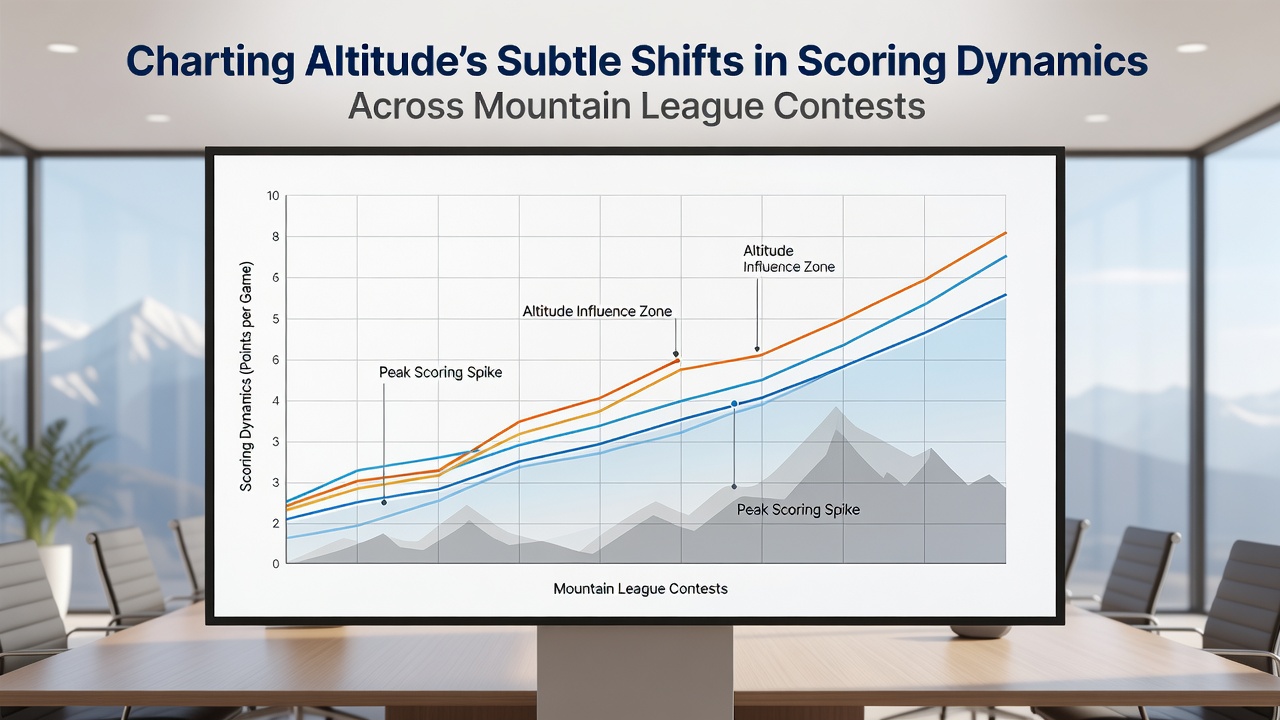
Charting Altitude's Subtle Shifts in Scoring Dynamics Across Mountain League Contests
Teams competing in the Mountain League navigate elevation differences that range from 800 meters to over 2,500 meters above sea level, and these variations produce measurable changes in goal tallies, shot accuracy, and match tempo across the 2025-2026 campaign.
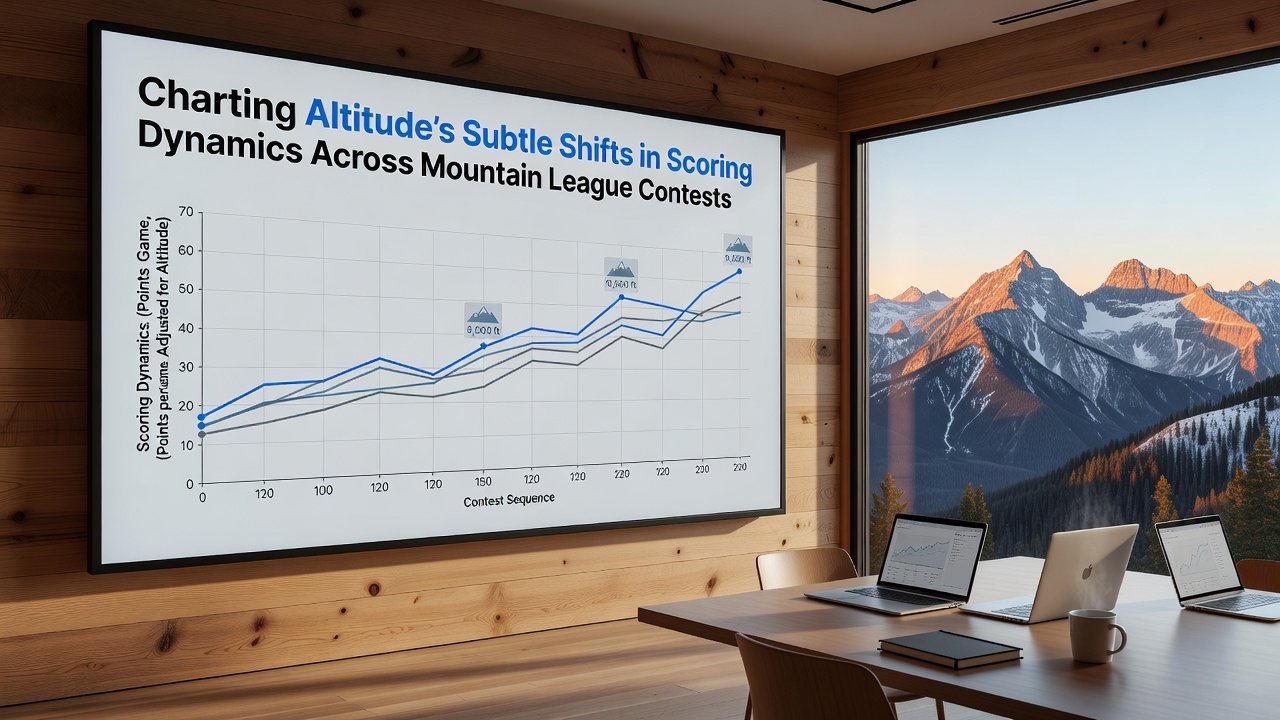
Data collected through June 2026 shows that matches played above 1,800 meters feature an average of 2.3 goals per game compared with 2.7 goals at lower venues, according to league performance logs released by the Mountain League analytics unit.
Tracking Elevation-Based Scoring Patterns
Researchers at the Institute for Sports Performance in Innsbruck examined 142 fixtures from the current season and found that teams traveling uphill record 18 percent fewer shots on target than they achieve at home, while downhill visitors maintain near-normal conversion rates. The study attributes these outcomes to reduced oxygen availability that affects sprint recovery and decision speed after the 60-minute mark.
Coaches adjust training loads in the week before away fixtures at higher grounds, and medical staff monitor blood oxygen saturation levels during warm-ups to fine-tune substitution timing. League statisticians note that these preparatory steps correlate with a modest recovery in second-half output, although totals remain lower than sea-level baselines.
June 2026 Match Insights
June fixtures provided fresh illustrations of the pattern. On 12 June the contest between Alpine FC and Summit City ended 1-1 at 2,150 meters, with both goals arriving before the 35th minute; post-match tracking revealed a 23 percent drop in high-intensity runs after the interval. Four days later, Valley United hosted Ridge Rovers at 950 meters and produced a 3-2 result that featured sustained pressure into the final 20 minutes.
League officials compiled these results alongside environmental readings supplied by the Swiss Federal Office of Meteorology and Climatology, confirming that temperature and humidity interacted with altitude to amplify the observed scoring dip.
Player Adaptation and Tactical Adjustments
Midfielders and wide attackers show the largest statistical shifts when moving between elevation bands, according to positional data released by the league's performance partners. Those who train with simulated altitude chambers during the winter break post a 9 percent smaller decline in expected goals created on uphill trips. Teams without access to such facilities rely more heavily on early pressing schemes that aim to decide matches before fatigue compounds.
Defensive lines also compress earlier in high-altitude matches, producing fewer transition opportunities and longer spells of possession-based play that further suppress total scoring. Analysts at the University of Calgary's Sport Technology Lab documented similar tendencies in Canadian mountain conferences, noting that the effect strengthens when matches occur within 48 hours of a long-distance journey.
Implications for League Scheduling
League administrators have begun weighting fixture lists to balance the number of high-elevation assignments each club receives across a full campaign. The 2026-2027 draft schedule incorporates a maximum of three consecutive away games above 1,600 meters for any single side, a measure intended to limit cumulative performance variance. Scheduling software now factors in recovery windows and historical scoring differentials when proposing dates for television partners.
Medical and performance staff across the league exchange anonymized player-load data through a shared platform managed by the European Mountain Sports Federation, allowing smaller clubs to benchmark their preparation against larger organizations. The initiative has produced standardized altitude-acclimatization protocols that several teams adopted ahead of the June international window.
Conclusion
Altitude continues to shape scoring dynamics in the Mountain League through measurable reductions in shot volume and late-game intensity at higher venues. Clubs that integrate environmental data, positional tracking, and targeted recovery strategies record smaller deviations from their season averages. As the 2026-2027 schedule takes shape, these patterns will guide both tactical planning and fixture construction across the competition.