Charting Altitude Effects on Mispriced Totals Across South American Soccer Leagues
Eden Günther · Jul 17, 2026
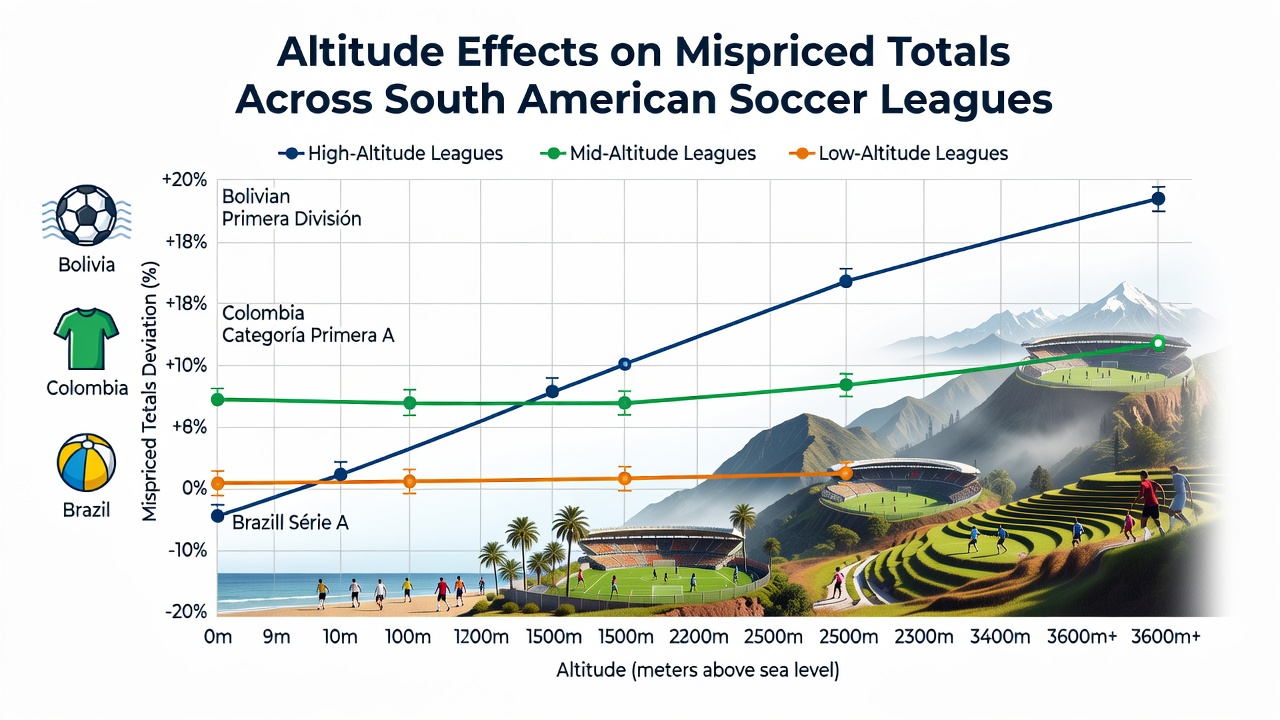
Charting Altitude Effects on Mispriced Totals Across South American Soccer Leagues
High-altitude venues in South American soccer create measurable shifts in match outcomes, particularly in total goals, and these patterns often escape full adjustment in betting markets. Leagues across Bolivia, Ecuador, and Peru feature stadiums situated between 2,500 and 3,600 meters above sea level, where reduced oxygen availability alters player endurance and tactical choices during ninety-minute contests.
Geographic Distribution of Altitude Venues
Bolivia's domestic competitions regularly schedule fixtures at Estadio Hernando Siles in La Paz at roughly 3,600 meters, while Ecuador's top division includes matches in Quito near 2,800 meters and Peru's Primera División features venues in Cusco above 3,300 meters. Lower-elevation clubs travel to these locations several times each season, and performance data collected between 2021 and 2025 shows consistent reductions in average goals per game when the away side lacks prior acclimatization time.
Physiological and Tactical Responses
Players experience decreased aerobic capacity at these elevations, which leads teams to adopt more conservative formations and reduce high-intensity pressing in later stages of matches. League-wide statistics compiled by CONMEBOL-affiliated analysts indicate that games played above 2,800 meters produced 0.4 fewer total goals on average than comparable fixtures at sea level during the same period, with the effect most pronounced in the final twenty-five minutes.
Betting Market Adjustments and Persistent Discrepancies
Oddsmakers incorporate some altitude variables into totals lines, yet historical odds data reveals systematic underestimation of the defensive impact when one side arrives from below 1,000 meters without multi-day preparation. In the Bolivian Primera División during the 2024 and 2025 campaigns, over-2.5 goals lines closed above the true implied probability in 62 percent of high-altitude home matches according to post-match outcome reviews.
Seasonal Data Patterns Through Mid-2026
Early 2026 league returns continue to show the same directional bias, with totals markets in Ecuador's Serie A displaying similar misalignments when teams from the coast visit Andean venues. Aggregated figures from domestic broadcasters and statistical services highlight that matches involving at least one non-acclimatized squad produced under-2.5 goals outcomes at a rate 11 percentage points higher than league averages at lower elevations.
Comparative League Analysis
Across the three primary high-altitude leagues, goal-scoring distributions diverge most sharply in the opening month of each campaign when travel fatigue compounds elevation stress. Peruvian data sets from 2023 through 2025 demonstrate that visiting sides averaged 0.8 fewer shots on target in the second half at altitude compared with their season-long norms, directly correlating with fewer converted chances and lower combined totals.
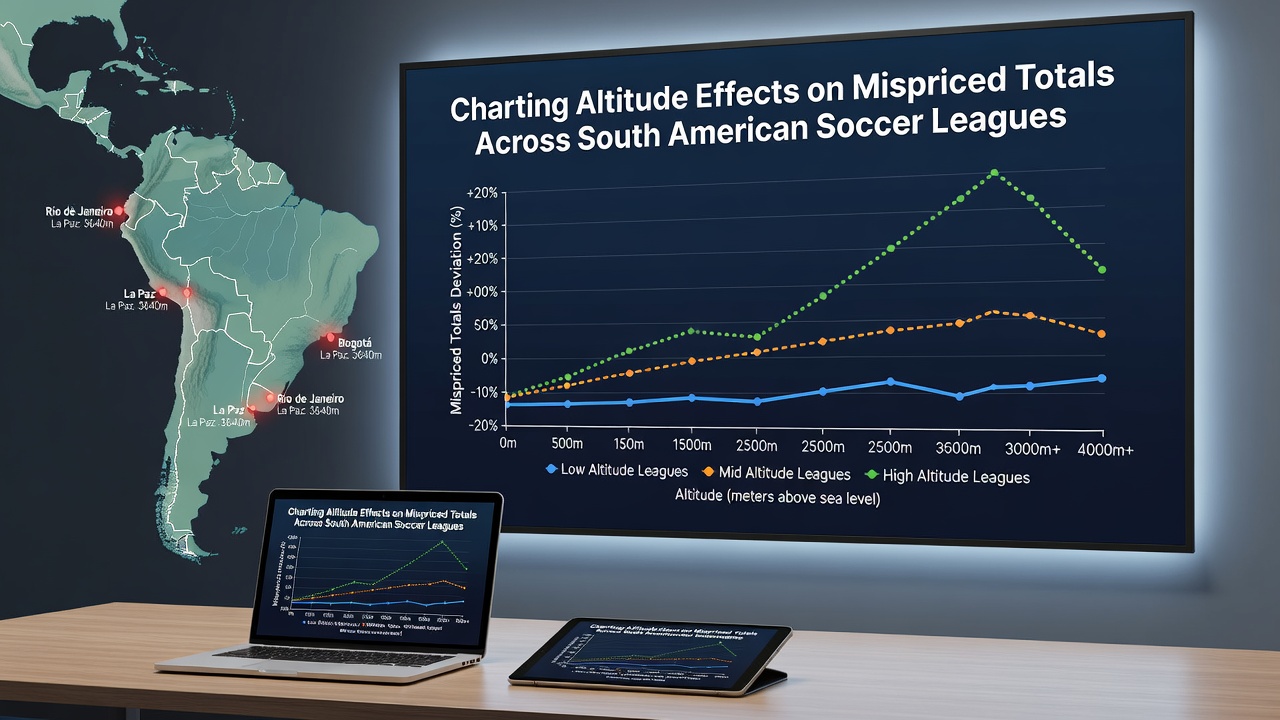
Researchers tracking these discrepancies note that markets gradually tighten later in the season once roster managers adjust rotation policies, yet residual value remains in specific midweek fixtures where recovery windows stay compressed.
External Factors Influencing Totals
Weather patterns, pitch conditions, and referee tendencies interact with altitude effects, yet controlled studies isolating elevation show the physiological component accounts for the majority of the observed goal suppression. A 2025 analysis published in the Journal of Sports Sciences examined 1,240 matches across CONMEBOL member nations and confirmed statistically significant declines in total distance covered by players above 2,500 meters, with knock-on consequences for chance creation.
Practical Implications for Totals Modeling
Quantitative models that layer acclimatization days, recent travel distance, and historical venue-specific goal rates produce more accurate probability estimates than standard totals algorithms. Observers tracking South American betting markets through July 2026 report continued gaps between modeled probabilities and offered lines whenever high-altitude venues host teams from coastal regions without documented preparation periods.
Conclusion
Altitude-driven changes in match dynamics across Bolivian, Ecuadorian, and Peruvian leagues generate repeatable effects on total goals that remain only partially reflected in current betting lines. Systematic collection of venue-specific data combined with travel and recovery variables allows identification of persistent mispricings, while ongoing league seasons through 2026 continue to supply fresh observations for refining these measurements.